

Hope lost, faith found through charity
Message of the Rector Major Fr. Fabio Attard, SDB
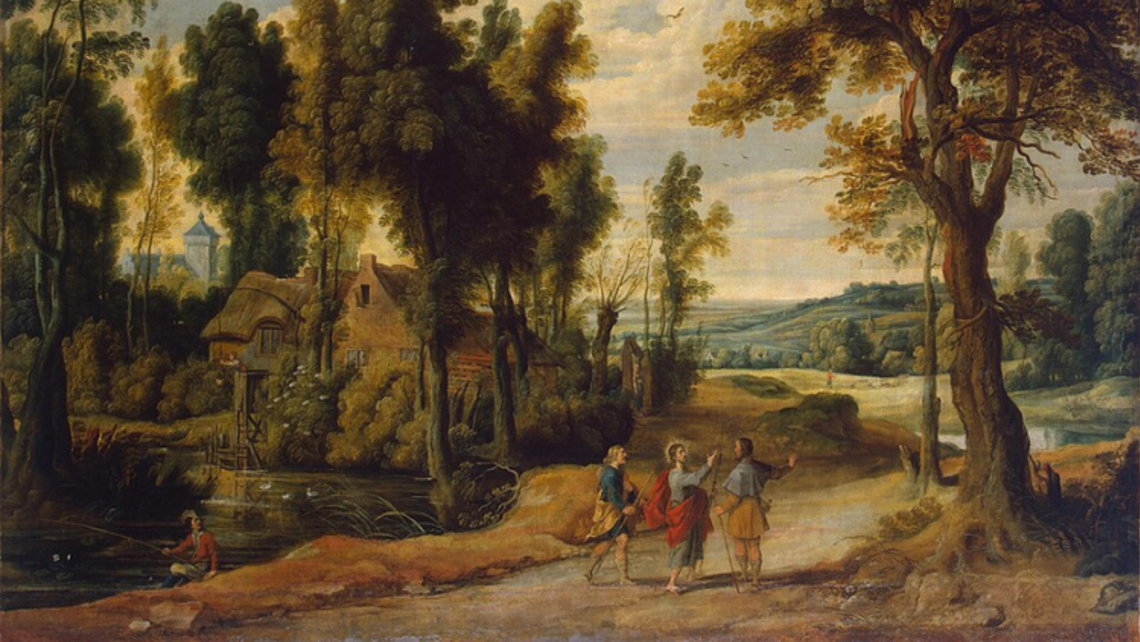
The story of the two disciples can be described as an experience of transformation from spiritual blindness to the recognition of the Risen One. I will comment on three movements that in some way have something important to say to us today.
1. Human understanding alone leaves us stranded
The disciples on the road to Emmaus represent the limits of purely human interpretation. They knew the events – the crucifixion and the rumors of the empty tomb – but only as information. These facts represented only a “tomb,” a “failure,” a “dead end.” “We had hoped that he would be the one to redeem Israel” (Luke 24:21). Everything was reduced to things belonging to the past. Hope was already dead.
This sentiment speaks powerfully to our own time. We live surrounded by information, but often stranded in meaninglessness. The news cycles, the traumas, the contradictions of our time, when read only through human analysis, lead to despair. The disciples’ conversation mirrors our own: meaningless facts become a burden rather than a light. Their thinking was locked in the box of their own human categories, and these alone can’t embrace the frontier of the resurrection.
How often do we, too, try to “solve” faith only with reason, with social analysis or with the resolution of institutional problems? It’s an effort that lacks the breath of the divine, an effort that loses spiritual oxygen.
2. Jesus as companion: prophetic enlargement
What’s striking is that Jesus, setting out on the road with them, doesn’t reveal himself immediately. Instead, he first listens (“Why are you talking about all this?”), then teaches. He doesn’t underestimate their pain but addresses it with patient pedagogy:
“Beginning with Moses and all the prophets, he explained to them what was said about himself in all the Scriptures” (Luke 24:27).
Jesus doesn’t impose understanding, even though it’s what they need. Jesus invites them to broaden their understanding. He gently invites them out of their labyrinth. The disciples’ reasoning, the Messiah they imagined, all of this is broadened and deepened through the Scriptures. The message of the prophets is a living text, not a dead one.
The most beautiful detail is that while they listened attentively, they didn’t recognize him while he taught them. Recognition comes later. With their hope still wavering, they offer their dear companion their hospitality (the breaking of bread).
Here we have a beautiful lesson for us today. It’s not just a matter of transmitting doctrine, noble and urgent as that is. People need to be helped calmly and patiently to see their own lives, their own questions, their own hopes within the broader understanding of Jesus’ message. This listening requires community; it feeds on communion. It’s a step toward true understanding, that is, the moment when the “eyes of the heart” are opened.
3. Encountering him in the breaking of bread: eyes open without seeing
The paradox is exquisite: “Their eyes were opened and they recognized him, but he vanished from their sight” (Luke 24:31). They encounter him precisely not by seeing him, but by recognizing him in the action of hospitality and communion.
This is the most profound point. The Eucharist is not just a ritual remembrance, but the ongoing reality of Christ’s presence through the gift and sharing of himself. The two disciples “now” do not need constant visual proof. They have experienced something deeper: participation in his gift.
I would like to share some insights for our journey based on the following three small steps.
a. Leaving behind a faith that is enslaved to the immediate and to appearances.
Even today, we risk living our faith in Jesus with the same dominant mentality of calculation: I want to see, to be certain. I accept, yes, but with certain conditions. Instead, Jesus, the companion of Emmaus, invites us to a different way that begins with closeness, is enriched by listening, and leads to communion. This path is marked by patience and charity. Gradually, Jesus asks us to dismantle those structures of fear and defense that keep us imprisoned within ourselves.
The Jesus we discover through teaching invites us to go further: entering into dialogue with others and taking on his model of self-giving. He asks us to renounce false images, to escape from traps of dependency of every kind, and to follow his example of total self-donation by dying for us on the cross. Fixing our eyes on him, dead and risen, we recognize our “prisons” without fear, and we overcome them with courage.
b. The authentic experience of faith is recognized through hospitality.
The two disciples could have resisted Jesus’ words. Instead, they didn’t! They allowed themselves to be challenged. Let’s not forget that they had lost all hope, perhaps even their faith. But they had not lost their capacity for welcome and hospitality; they were still disciples capable of living charity!
Here, at this point, and only at this moment, there’s a turning point: they recognized him by giving him hospitality. When they welcomed Jesus, Jesus in turn gave them everything, all of himself. They asked Jesus to stay “with them.” Instead, Jesus rewarded them by remaining “in them”!
c. The Eucharist as the culmination and beginning.
The breaking of bread is not the end of the story; rather, it’s the beginning of their authentic story. Although evening was falling, the two disciples immediately returned to Jerusalem, to the community, to bear witness. Now the darkness outside no longer had power over the light that filled the hearts of these two believers. The true power of the Eucharist is what pushes us outward toward others and upward toward God. This is the beauty of faith in Christ; it is a faith that is sustained by hope and lived with charity.
Latest Posts

Province Prepares to Celebrate 2026 Jubilarians
Thirteen confreres have 40, 50, 60, and 70 years of religious profession and/or ordination. Read more

Salesian Family Interamerica Provincial Delegates Meeting
Eighteen groups of the Salesian Family have presences in the region. Read more

Embark on Next Year’s Salesian Family Spirituality Days in Turin
This global gathering will be guided by the theme of the 2027 Strenna. Read more

- 1 of 817
- ›
Categories
Archive
- October 2026 (14)
- September 2026 (20)
- August 2026 (16)
- July 2026 (14)
- June 2026 (11)
- May 2026 (25)
- April 2026 (19)
- March 2026 (26)
- February 2026 (17)
- January 2026 (24)
- December 2025 (23)
- November 2025 (12)
- October 2025 (28)
- September 2025 (18)
- August 2025 (21)
- July 2025 (14)
- June 2025 (19)
- May 2025 (19)
- April 2025 (29)
- March 2025 (25)
- February 2025 (22)
- January 2025 (21)
- December 2024 (23)
- November 2024 (19)
- October 2024 (30)
- September 2024 (19)
- August 2024 (23)
- July 2024 (19)
- June 2024 (16)
- May 2024 (26)