


A reflection on Matt. 10:26-33
Message of the Rector Major Fr. Fabio Attard, SDB
When Jesus invites his disciples “not to be afraid,” we must be careful not to reduce this invitation to a superficial slogan. It’s a call — a word spoken by a Master to those who’ve chosen to walk and be with him. For all their shortcomings, Jesus’ disciples are the ones who’ve already left everything to follow him. Jesus is speaking to people who are gradually discovering what friendship with him means, and that it’s worthwhile to take him seriously.
It’s precisely within this friendship that the command not to be afraid carries its full weight.
I. “Do not be afraid” — not a choice, but a discovery
We’re tempted to read these words as a call for courage that we must summon from deep within ourselves, through willpower or positive thinking. That’s not the case.
Jesus’ invitation isn’t based on human calculations. It’s not empty optimism. The disciples, whom Jesus sends out like “sheep in the midst of wolves” (Matt 10:16), face real dangers and opposition. What, then, does “Do not be afraid” truly mean?
“Not being afraid” is possible only because “something” has happened to those who follow Jesus. A relationship has been formed. A friendship emerges — in the deepest sense of the word — one that’s taken root in the depths of the disciple’s heart. Friendship with Jesus is unlike any other friendship. In him and with him, we discover that we are known and therefore are supported. This relationship isn’t a sentimental metaphor. It’s the language of intimacy.
The absence of fear, then, is a discovery we slowly realize over time through the practice of remaining close to him: in prayer, in listening to his Word, in sacramental encounter, and in service to the poor and the young. We realize that, little by little, what began with effort develops into trust. What began as a discipline becomes love, and in that love, fear doesn’t vanish — it loses its grip. We’re no longer slaves but free persons because we’re embraced by Jesus’ love.
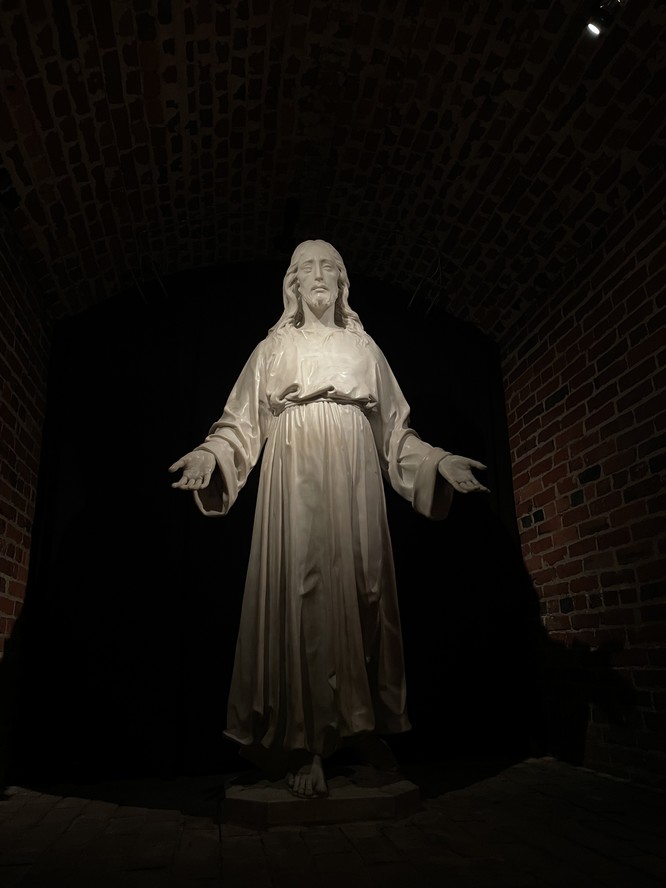
of the Assumption in Baltimore, Md.
Credit: Julia St. Clair,
Province Communications Director
II. Following Jesus: a journey that enriches our humanity
Jesus is sending his disciples forth, yet he isn’t abandoning them. The entire movement of this passage is one of a mission taking place within the context of accompaniment. He tells them what they’ll have to face. He tells them who their Father is. He promises to give testimony on their behalf before the Father. In other words, he doesn’t merely give instructions; he gives himself.
This is the heart of the Christian life: not the observance of a code, but the journey of entrusting oneself to a Person. “Following Jesus” is a phrase so familiar that we risk stripping it of its extraordinary nature. “To follow” means to get moving, to leave behind the security of what once was, and to walk toward what’s being made new — never alone, but with him, in him, and through him.
The beauty of this journey is that it doesn’t diminish us; it doesn’t flatten the human person. On the contrary, it’s the path of becoming fully human. When we entrust ourselves to Jesus — when we dare to surrender to him — we’re like the child who abandons himself in his father’s arms. We find ourselves again. We discover a capacity for love, resilience, joy, and solidarity that we didn’t know we had.
This is what the journey of faith teaches us, slowly but surely: that we’re supported, that our humanity is precious in his eyes, that we’re worth more — infinitely more — than we sometimes dare to believe. And it’s from that certainty of being known and loved that we draw the strength to face the challenges of the mission without fear.
III. Declaring oneself for Jesus: a mature personal identity
“The one who confesses me before men, I, too, will confess him before my Father who is in Heaven.”
This is the culminating movement of this excerpt. Let’s listen to it attentively because it’s easily misunderstood. Declaring yourself for Jesus isn’t a political act. It’s not the adoption of an ideology, a flag to carry, or a cause to defend in the public arena. The language of “declaring oneself” could suggest a time of public commitment, a sort of strategic positioning. This isn’t what Jesus asks of us.
When the disciples speak about Jesus in the light of day, when they proclaim from the rooftops what they’ve heard in the shadows, they’re not acting. They’re simply sharing what they’ve become. They talk about him because they belong to him. They bear witness because their lives were shaped by his.
Declaring oneself for Jesus, therefore, means approaching the deepest truth of what one is. It’s not a time of religious enthusiasm or emotional social belonging. It’s the recognition, matured through friendship with Jesus, of having allowed oneself to be formed by prayer and abandonment: my identity is rooted in my “dwelling” in Christ Jesus.
Conclusion
“Do not be afraid”: not because the world has become safe. Not because the mission is easy. But because we are known, loved, and supported by Christ Jesus. We are accompanied by him who has counted every hair on our head and who calls us by name before the Father. We ask that we may never lack the grace of this freedom, the fruit of our friendship with Jesus.
Latest Posts

Stony Point: National Shrine Holds 9/11 Memorial
Over 250 people joined together for the service. Read more
Reflections on 9/11
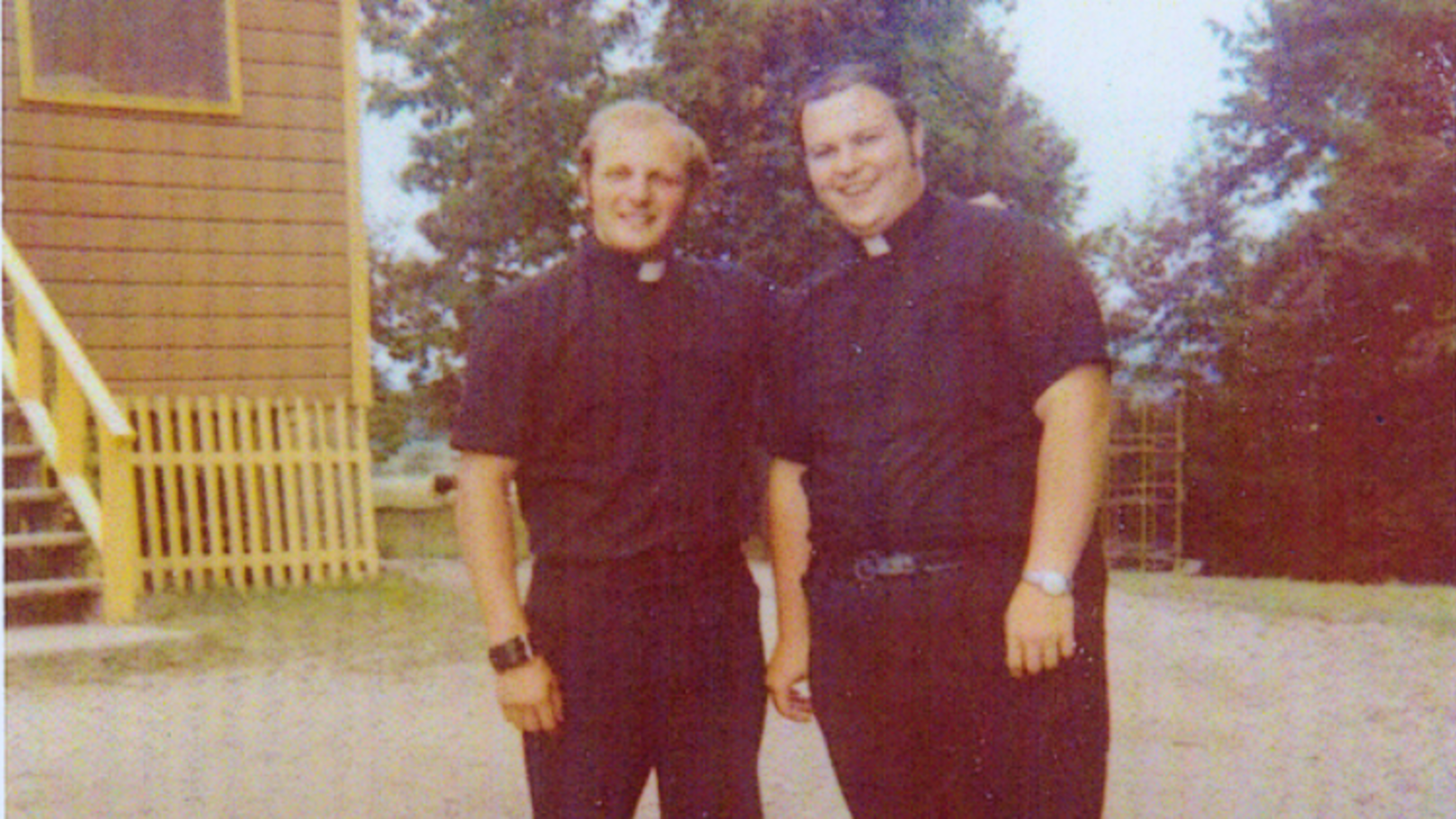
Fr. John Nazzaro shares his experience assisting in the aftermath of 9/11. Read more

Seven Cooperators Inducted at Archbishop Shaw High School
The induction occurred during a school Mass at Archbishop Shaw High School. Read more
