


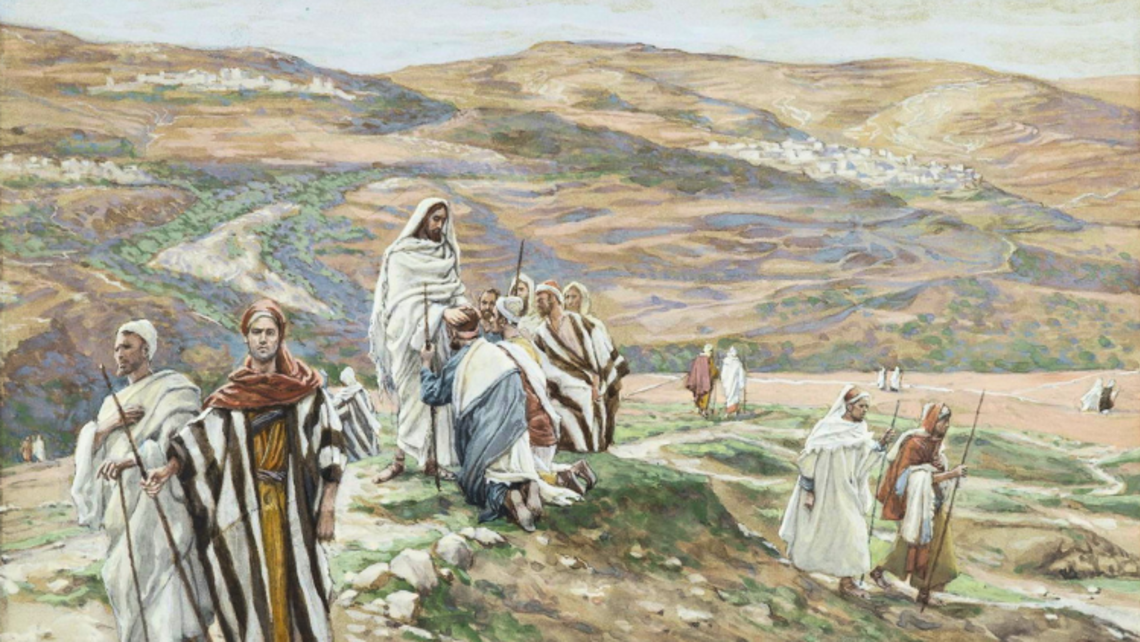
We, too, are sent. Our workplaces, neighborhoods, families, and friendships are the “towns and places” where Christ intends to come, and he sends us there ahead of him to prepare the way.
Message of the Rector Major Fr. Fabio Attard, SDB
In the Gospel of Luke, at the beginning of Chapter 10 (verses 1-19), Jesus extends his mission beyond the Twelve, sending 72 disciples ahead of him to prepare the way. It’s a decisive moment: the mission is no longer reserved for a small apostolic circle but extends to a wider group of ordinary followers. The implication is clear: every disciple is a missionary, sent into his or her own particular corner of the world to make Christ present.
For us Christians today—whether we work in offices or hospitals, raise children at home or serve in schools, run businesses or care for the elderly—this passage speaks directly to our baptismal vocation. We, too, are sent. Our workplaces, neighborhoods, families, and friendships are the “towns and places” where Christ intends to come, and he sends us there ahead of him to prepare the way.
The instructions Jesus gives are not solely for religious “professionals,” but for all who bear his name. They are instructions that reveal what Christian witness should look like in any context: traveling light, bringing peace, healing the wounded, and proclaiming the closeness of the Kingdom through the concrete reality of our own lives. In a culture that often relegates faith to a private conviction or a Sunday service, Luke 10 reclaims the entirety of life as missionary territory. These three reflections explore how Jesus’ words to the 72 shed light on what it means to live as disciples sent into the ordinary circumstances of daily life.
1. Traveling Light: Freedom from the Burden of Self-Sufficiency
“Carry no purse, no bag, no sandals.” Jesus sends out disciples who are deliberately vulnerable, radically dependent on God and on the hospitality of others. His instruction challenges the fundamental assumptions of contemporary life: that security derives from the accumulation of things, that worth comes from self-sufficiency, and that we must always keep everything under our control.
For Christians navigating ordinary life—careers, family responsibilities, economic pressures—this call to evangelical poverty doesn’t mean abandoning prudent planning or responsible stewardship. Rather, it poses a deeper spiritual question: On what do we truly rely?
We live in a culture that teaches us to place our trust in our own ability to handle every eventuality. We accumulate certifications, credentials, and contacts and consequently build ever-larger “purses.” And we exhaust ourselves trying to maintain the illusion of self-sufficiency.
Jesus’ instruction liberates us from this burden. Traveling light means acknowledging our fundamental dependence on God’s providence, on the community of believers, and on the grace we can’t manufacture ourselves. It means being willing to admit when we don’t have the answer, when we’re in need of help, and when our carefully laid plans fall apart, thereby trusting that God will provide another way.
In practical terms, it means admitting that we’re not perfect, and that maintaining a perfect image ultimately enslaves us. It also means being honest with our children about our struggles, and choosing simplicity over accumulation, presence over productivity, and trust over anxiety.
We’re not called to be Christians who appear to have everything figured out. We’re invited to discover that Christ is sufficient, that his grace is truly enough, and that dependence on God is pure freedom.
2. Before All Else, Peace: Presence in a Fragmented World
“Into whatever house you enter, first say: ‘Peace be to this house.’” Before any activity or project, let there be, first of all, peace. We live fragmented lives, trying to juggle a thousand things at once and thus being only half present to one another in our conversations. Jesus sends us forth to bring peace. Mind you, this is not the superficial peace born of the illusion that we have everything under control, but is, rather, true, profound peace—the kind that comes from knowing we’re sustained by God, even amid chaos.
This peace serves as a countercultural witness. It’s evident when our colleagues are stressed, yet we remain steadfast, not through denial, but through trust. It’s evident when our neighborhoods are gripped by anxiety, yet we offer a calm presence, not through naiveté, but through hope.
Consider the everyday “houses” you enter: your workplace, your own home, the gym, your children’s school, your neighborhood. Bringing peace might mean refraining from workplace gossip and instead speaking with respect; cultivating an atmosphere in your home where family members can breathe freely and enjoy silence; or being the neighbor who listens without judgment.
This peace becomes particularly powerful and meaningful when shared with those who are struggling. How many people carry invisible burdens, such as battles with mental health, financial anxiety, relational crises, or existential despair? They don’t need answers. They need someone who can stand with them in their pain without being destabilized—someone who radiates a peace that suggests solid ground beneath the chaos.
Our Christian witness is primarily about who we are: people who have found a peace that the world can neither give nor take away.
3. Healing and Proclamation: Making the Kingdom Visible
“Heal the sick who are there and tell them, ‘The Kingdom of God is near you.’” Word and deed are inseparable. This means recognizing the wounds around us and responding with concrete acts of empathy. It means acknowledging the sense of emptiness and meaninglessness that some bear, the ruthless competition, or the burnout experienced by others. These sufferings call us to offer those in need the gift of a presence that knows how to listen without judgment. It means standing close to those who feel isolated, especially the elderly, through small, simple gestures that, nevertheless, leave an imprint on a suffering heart.
The Kingdom draws near when someone can say: “I encountered something different here. I was welcomed, valued, and restored.”
This is how the early Church grew, not primarily through eloquent sermons, but through communities that lived so differently that people were compelled to ask: “What do you have that we don’t? Why do you love in this way? Where does this hope come from?”
Our lives become the proclamation. And when people ask, we’re ready to name the Source: “The Kingdom of God has come near you. The love you have experienced doesn’t come solely from us; it comes from Christ, who has made all things new and who invites you into this new reality.”
Latest Posts

Keep Praying the Mary Help of Christians Novena
It continues now through Saturday, May 23. Read more

New Rochelle: Salesian High Wins Tennis Championship
The team fought through every challenge and earned this title together. Read more

Port Chester Salesian Family Celebrates 150 Years of Salesian Cooperators
Even the rain could not stop the joy of the day. Read more
